Why this matters:
Most solopreneurs think they need to hire a team to grow. More employees mean more revenue. But what if you could simply clone yourself instead? Not in a science fiction way, but with something anyone can use today. I tried it, and it completely changed my business.
What happened:
In November 2025, I faced a problem. I had fifteen projects running, but only two hands and twenty-four hours a day. I couldn't handle everything myself, but I also didn't want to hire a traditional team. The thought of managing employees, paying salaries, and dealing with HR issues simply didn't appeal to me. I wanted to focus on my business, not on administration. So I started experimenting. I built an AI and gave it all my knowledge. My processes, my way of thinking, my experience. I showed it how I work, and it started taking over tasks. Writing blogs, drafting emails, conducting research. Just like me, only faster.
How I solved it:
I had two options. The first was the classic path: hire employees, build a team, learn how to be a leader. The second option was to build my own system. I chose the second option and developed an app I call Clone-Ralf. In this app, I have fifteen independent projects, and each project has its own AI. Each AI has its own knowledge, its own workflows, and its own personality. It's like a team of employees, except I don't have to manage vacation schedules. But I went one step further. I brought in two external AI services, Qwen and Voila, for quality control. Why? Because I believe in the principle of double control, just like the Japanese auto industry in the 1980s. Back then, they conquered the global market because they had stricter quality control than their competition. My own AI does most of the work, and the external AIs check the results. I only handle the strategy and final approval.
Why this works:
It works because AI doesn't get tired. It doesn't make careless mistakes when the instructions are clear. It doesn't need a salary, vacation days, or sick leave. And most importantly: it learns. Every time I work with my AI, it gets better. It understands me better, makes fewer mistakes, and works faster. I myself focus on what I do best: setting the direction. I decide what needs to be done, and then I let my AI team work. The result is that I manage fifteen projects. Alone. Without a traditional team. Without overtime. I haven't just doubled myself, I've multiplied by ten.
How you can do this too:
The first step is to build your first AI. Give it your knowledge, your workflows, and your experience. Show it how you work and how you solve problems. The second step is to let it work. Give it a task and watch how it gets done. Correct it if necessary, but let it do its thing. The third step is to build more AIs. One for each project, one for each area of your business. And the fourth step is to get external AIs for quality control. Double control, just like the Japanese auto industry in the 1980s, which conquered the global market with it. That's all you need.
What you can take away from this:
You don't have to hire a team to grow. You can clone yourself. With AI, you can build a team that works for you without you having to manage personnel. Fifteen projects, alone, without stress. This isn't science fiction, it works today. You can start tomorrow.
Questions for your own AI:
If you want to find out how to best integrate AI into your daily routine, just copy one of these questions into your own AI. They will help you find and solve your personal bottleneck:
How can I analyze my current weekly schedule to figure out which recurring tasks I can hand over to an AI?
What are the best methods to teach an AI my personal way of working and my quality standards?
How do I recognize if my AI is trained well enough to work independently, and when do I still need human quality control?
Can you help me create a clear, three-step workflow where I set the strategy, the AI handles the execution, and I only check the final result?
Which external AI services are best suited for quality control, and how do I integrate them into my existing workflow?
---
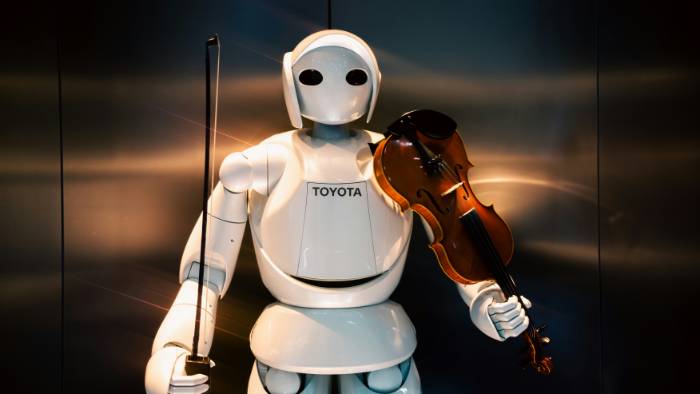
Photo by Lilian Do Khac on Unsplash